
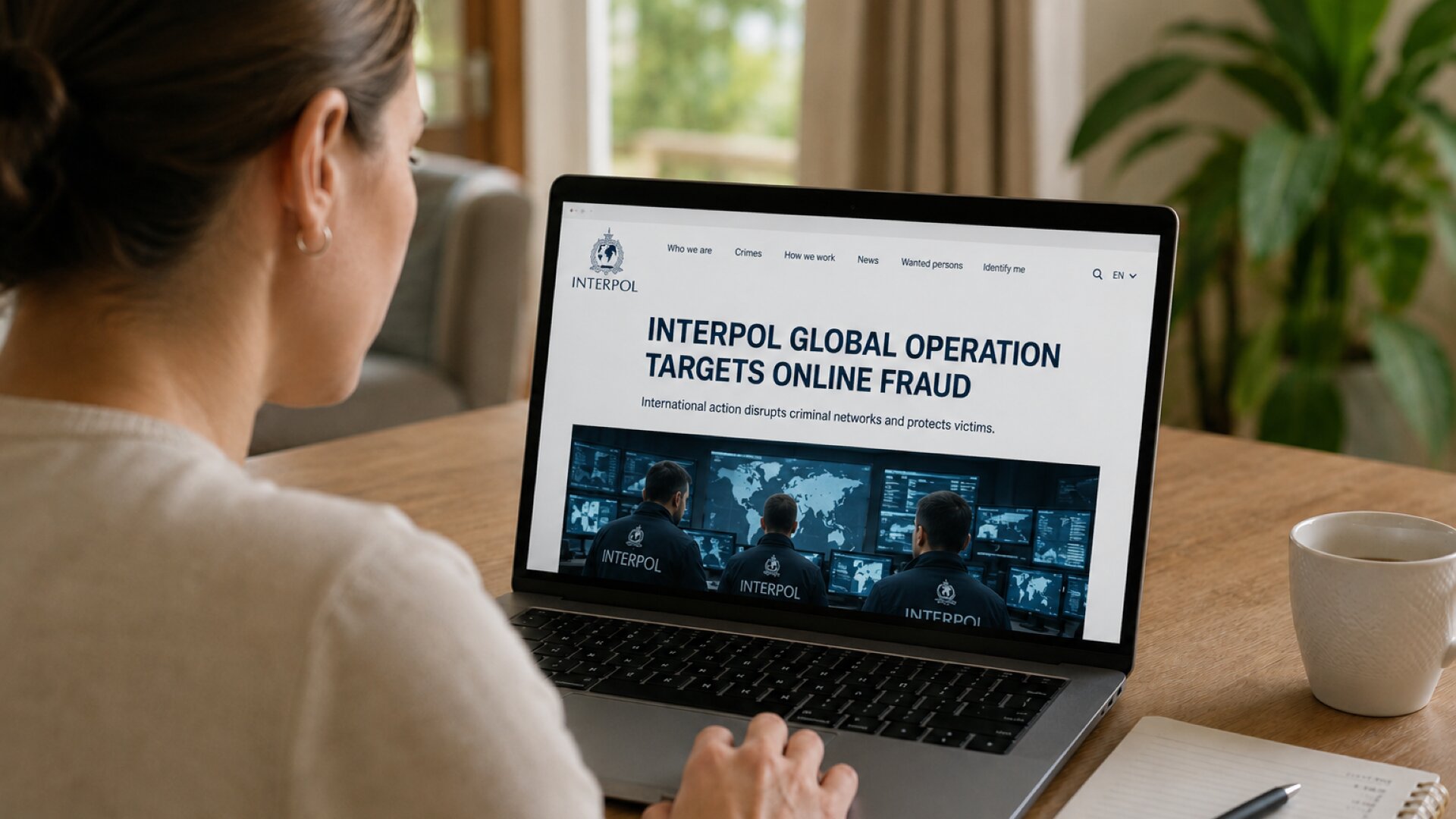
INTERPOL helped arrest more than 5,800 people during a global operation targeting online fraud. Here’s how these scams work, why they continue to spread, and how you can protect yourself.
Table of Contents
What Happened in INTERPOL’s Global Fraud Crackdown?
According to INTERPOL, Operation First Light 2026 led to 5,811 arrests across 97 countries and territories. The operation ran from January 15 through April 30, and INTERPOL announced the results on July 9.
Authorities intercepted $293 million in criminal assets, blocked 31,014 bank accounts, and solved 23,715 cases.
The operation focused on social engineering, which means manipulating people into giving away money or private information. The schemes included romance and investment scams, impersonation, sextortion (blackmail involving intimate images), and business email compromise, where criminals pretend to be a trusted business contact.
INTERPOL did not say that leaked personal data was used in these specific cases. However, personal information can help criminals make fraudulent messages and calls appear more convincing.
Your information may also have been leaked in an unrelated data breach or data leak without you realizing it. If you are unsure, automatic monitoring can help you spot problems earlier. Futureproof monitors your data for leaks 24/7 and helps you reduce scam risks with simple, clear steps.
Who Was Targeted in Operation First Light?
INTERPOL identified more than 142,000 victims, including individuals and businesses across many countries.
In Eswatini, criminals pretended to be Brazilian police officers during video calls and convinced victims to transfer money for supposed “safekeeping.” Authorities arrested 82 people and seized 240 electronic devices.
In another case, criminals impersonated a supplier and targeted a Singapore-based trading company. Authorities stopped a $6.6 million transfer before the money reached the fraudsters.
Police in Macao also found a person being manipulated by criminals posing as public officials. The victim was preparing to send nearly $372,000 when police intervened.
How Criminals Used Social Engineering to Steal Money
These cases show that criminals do not always need complicated hacking tools. Instead, they may rely on trust, pressure, and convincing impersonation.
They can pretend to be police officers, bank employees, government officials, suppliers, or romantic partners. Then, they create a believable reason for you to send money or share private information.
In Eswatini, for example, the group built a realistic replica of a Brazilian police station. Fake uniforms and signs helped make their video calls look convincing. In Thailand, investigators found that money from romance scams was moved through cryptocurrencies, or digital currencies, to make the financial trail harder to follow.
The methods may look different, but the goal is to gain your trust, create pressure, and convince you to act before you question the request.
Futureproof monitors your information for data leaks 24/7 and guides you with clear steps to keep it safer from scams.
Run a free checkWhat Operation First Light Can Teach You About Fraud
Operation First Light shows both the scale of social engineering fraud and how convincing these schemes can become.
Criminals may use authority, urgency, romance, or a familiar business relationship to lower your suspicion. That means a professional-looking call, message, or video chat is not proof that the person is genuine.

3 Simple Ways to Protect Yourself From Social Engineering
These simple habits can help you recognize suspicious requests before you act:
1. Verify unexpected requests another way
Be careful when someone unexpectedly asks you to transfer money, share a code, or provide private information. Criminals often pretend to represent an organization you already trust.
End the call or message, then contact the organization yourself using the phone number or website you normally use. Do not rely on contact details provided by the person making the request.
2. Treat “safe account” requests as a warning sign
Be especially careful if someone tells you to move money somewhere for “safekeeping” or as part of an investigation. The Eswatini and Macao cases both involved criminals pretending to have official authority.
Before transferring anything, contact your bank directly and explain what happened. If someone tells you to act quickly, take a moment to check that the request is real.
3. Protect your main email account
Watch for password reset messages or login alerts you did not request. Your email connects to many other services. Someone with access may use it to reset passwords elsewhere.
Open your email settings and find the Security section. Create a strong unique password and turn on two-step verification. When you sign in, two-step verification asks for an extra check after your password, such as a code sent to your phone.
Urgent Requests Deserve Extra Verification
Operation First Light shows how criminals can use trust to make fraud more convincing. A caller may sound professional, a message may include familiar details, and even a video call can be carefully staged.
If someone unexpectedly asks for money or private information, give yourself time to verify the request through a trusted contact method.
Tools like Futureproof can also help you spot data risks earlier and strengthen your email security, making suspicious activity easier to catch before it causes harm.

At Futureproof, Kevin explains digital safety in simple words, with clear tips and zero fluff. He holds a degree in information technology and studies fraud trends to keep his tips up-to-date.
In his free time, Kevin plays with his cat, enjoys board-game nights, and hunts for New York’s best cinnamon rolls.