Table of Contents
Why Feelings Become the Target
When most people think of scams, they picture computer hackers, stolen passwords, or viruses. But the truth is, many scams don’t begin with technology at all. They begin with emotion.
A ringing phone. A flashing subject line. A sudden notification on your screen. Before you’ve even read the details, you’ve already felt something: fear, urgency, curiosity, or trust.
That split second of emotion is the real entry point. The email, the phone call, the fake website — those are just delivery systems. What the criminal is really after is your reaction.
Cybersecurity experts often label this social engineering or psychological manipulation. In this series, we use a clearer term: Emotional Hacking. Because instead of breaking into your computer, scammers break into your instincts. Once your feelings take over, your wallet isn’t far behind.
Fear Scams — When Panic Drowns Out Logic
Fear is the scammer’s sharpest weapon. It is fast, physical, and it silences rational thought.
Imagine this:
- You open an email: “Suspicious activity detected. Your account has been frozen. Act within 30 minutes to restore access.”
- Or you hear a voicemail: “This is the IRS. If you don’t return this call immediately, law enforcement will be at your door.”
Your chest tightens, your heart races, your hands might even tremble. That’s not weakness — that’s biology. It’s called the fight-or-flight response. Your brain floods with adrenaline, preparing you to react, not to reason.
The Federal Trade Commission reported that in 2023 Americans lost more than $10 billion to fraud, much of it through scams designed to provoke exactly this kind of panic (FTC).
How to fight back:
- Real banks don’t shut down accounts in half an hour.
- Real government agencies don’t demand payment in gift cards.
- If a message ties your stomach in knots, that knot itself is a warning.
Authority Scams — When “Official” Voices Silence Doubt
If fear alone doesn’t push someone over the edge, scammers add authority to the mix.
Picture the scene: it’s evening, your phone rings, and the caller ID says “IRS.” A firm, confident voice tells you: “You owe taxes. If you don’t pay today, officers will arrive at your home tomorrow.”
Even if you know your taxes are current, just hearing those words can make your pulse quicken. That’s authority bias in action — the natural instinct to obey voices that sound official.
The IRS publicly warns that it does not demand instant payment by phone, nor does it threaten arrest. But scammers know that when authority and fear combine, hesitation disappears.
Defense: Real institutions send letters. They give time to respond. The moment you hear “pay now or else,” you’re not hearing authority — you’re hearing a performance.
Curiosity Traps — The Bait That Hooks You
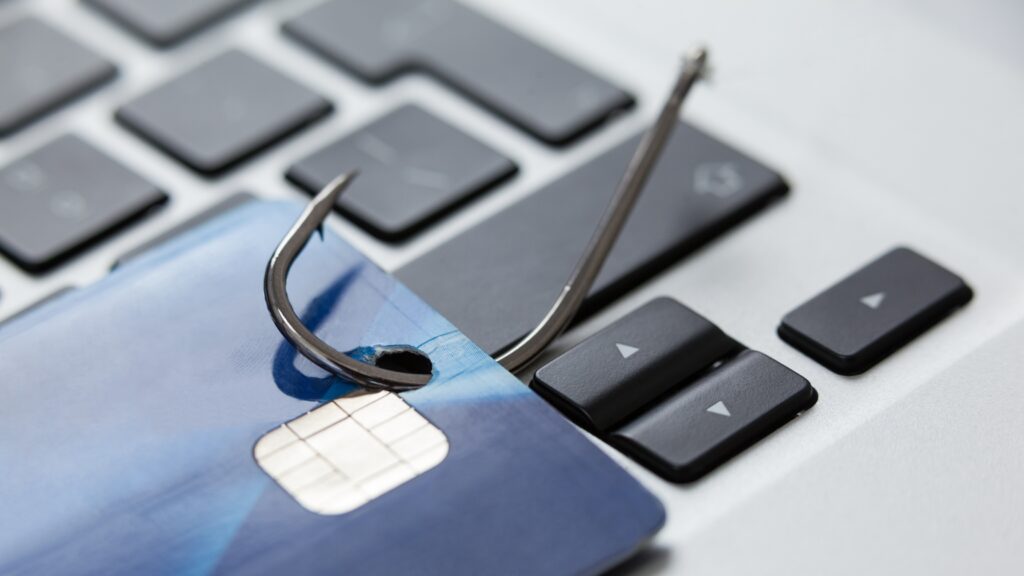
Not all scams shout. Some whisper, using curiosity as bait.
- A text: “Your package is waiting. Click here to confirm delivery.”
- A Facebook alert: “Someone uploaded photos of you — click to see.”
- An email subject line: “Important account update — open immediately.”
It feels harmless to just take a look. That’s what makes it powerful. Curiosity triggers dopamine in the brain. Even before you click, the promise of “finding out” gives you a tiny reward. That reward pushes you to act first and think later.
The AARP Fraud Watch Network has identified delivery scams and smishing (SMS phishing) as some of the fastest-growing fraud categories.
Quick self-check:
- Did you actually order a package?
- Why would FedEx text you from a random number?
- Why would Facebook ask you to log in outside its own app?
If your only reason for clicking is “I just want to know,” that’s not curiosity — that’s bait.
Trust Exploited — The Familiar Voice That Isn’t
The hardest lever to resist is trust.
A grandmother answers the phone. She hears her grandson’s voice: “Grandma, I’m in trouble. Please don’t tell Mom — just send money.” Her heart jumps. She wires $15,000 without a second thought. Later, she learns it wasn’t him at all. The voice was cloned from a short online video using artificial intelligence (FTC).
The FBI has warned that AI voice-cloning scams are spreading rapidly, because our brains are wired to believe the voices of people we love.
Why it works: These scams don’t target your logic. They target your love.
Defense: Create a family code word — a simple phrase only your real loved ones know. If the caller doesn’t know it, you hang up.
Real Stories, Real Losses
These examples aren’t just theory. They’re happening every day:
- A man clicked a fake UPS tracking link and unknowingly installed malware that stole his banking logins.
- Thousands of people received “Amazon security” emails and handed over their credentials to criminals posing as the company (Washington Post).
- A woman lost $5,000 to a cloned “grandson in jail” call.
Different channels, same playbook: trigger an emotion → demand fast action → collect the payout.
Your Defense Toolkit — Pause, Verify, Share
You can’t shut off emotions. But you can slow them down.
Pause. If a message makes your pulse race, don’t respond immediately. Give yourself time — even ten minutes is enough to break the scammer’s momentum.
Verify. Use official sources you already trust: the phone number printed on your bank card, the website you type in yourself. Never the link or number given in the message.
Share. Talk it over with someone you trust — a neighbor, a family member, a friend. Fraud thrives in secrecy. Once you bring it into the open, it loses its power.
The AARP Fraud Watch Network sums it up simply: Stop. Think. Talk.
Final Word — Awareness Is Power
Fear, curiosity, trust — these aren’t flaws. They’re what make us human. But in the wrong hands, they can be weaponized.
The next urgent email, the next “official” call, the next curious text, the next familiar voice — instead of pulling you in, let them serve as signals.
Signals that someone is trying to hack not your computer, but your emotions.
Pause. Verify. Share. That’s your shield.
And one more step: spread the word. Awareness moves faster than fraud. That’s how we win.

At Futureproof, Kevin makes online safety feel human with clear steps, real examples, and zero fluff. He holds a degree in information technology and studies fraud trends to keep his tips up-to-date.
In his free time, Kevin plays with his cat, enjoys board-game nights, and hunts for New York’s best cinnamon rolls.