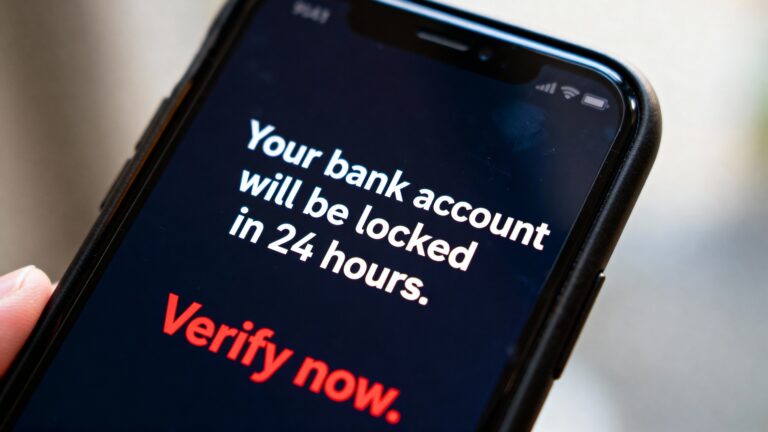

Have you ever been told buying gold is the way to protect your money? That’s the gold bar scam. Learn why it targets older adults and how to protect yourself.
Criminals across the U.S. are exploiting fear, authority, and secrecy to push seniors into one of the fastest-growing fraud schemes today: the gold bar scam.
The scam is simple: someone claims you are in trouble, tells you to buy gold fast, and asks you to hand it to a courier. Once the gold leaves your hands, it is almost impossible to get it back.
If anyone tells you to buy gold urgently, it is a scam: keep your gold secret, or give it to someone else.
This explainer breaks down how the gold scam works, why it targets seniors, and how to spot the warning signs before money or valuables are gone.
What Is the Gold Bar Scam?
The gold bar scam is a trick that pushes people to turn their money into gold — and then steals it.
Scammers pretend to be:
- police
- government agents
- financial officials
They say your name is linked to a crime or investigation. Next, they tell you the only way to “protect” your money is to buy gold or precious metals.
After that, they instruct you to hand the gold to a courier for “safekeeping” or “federal verification.” Once the gold is gone, there is usually no way to recover it.
This tactic is spreading because it bypasses many of the safeguards banks and payment platforms use to flag suspicious transactions.
How Does the Gold Bar Scam Work?
This scam uses fear and pressure to make people act fast and stop asking questions.
The steps are simple and repeat the same pattern:
Step 1: An “Official” Threat
Scammers say they work for:
- the police
- a federal agency
- a financial authority
They claim you’re under investigation or that your money is in danger. As a result, they push urgency and fear so you don’t have time to think. Their goal is to scare you into acting right away.
Step 2: Keep It a Secret
They tell you to:
- not talk to your family
- not call your bank
- not speak to a lawyer or advisor
- keep everything private
This is a major warning sign. Real authorities never tell you to hide information or rush big financial decisions.
Step 3: They Push Gold as “Safe”
The scammer says your bank account isn’t safe. They claim gold is:
- safer
- protected
- approved by the government
However, this is false. In reality, scammers use gold because it becomes very hard to trace once it’s gone.
Futureproof monitors your information for data leaks 24/7 and guides you with clear steps to keep it safer from scams.
Run a free checkStep 4: A Courier Takes the Gold
Someone comes to pick up the gold in person. After that, the gold is:
- sold
- melted down
- sent overseas
Once this happens, the money is almost impossible to recover.

Why Do Scammers Target Seniors?
Scammers often target older adults because they may have savings — and are more likely to trust official-sounding voices.
Scammers look for people who have:
- retirement savings
- home equity
- long-term bank accounts
- less experience with today’s fast-moving scams
Consequently, reported losses reached about $186 million, while nearly 98% of those losses affected people over age 60.
Why Is the Gold Bar Scam So Hard to Detect?
Simply put, it avoids the systems that usually stop fraud.
Unlike credit cards or wire transfers:
- buying gold looks normal
- jewelry stores make it feel legitimate
- banks may allow the withdrawal
Once money is turned into physical gold, most fraud protections are gone.
This removes the digital trail that banks and fraud systems rely on, making the scam much harder to detect and stop.
What Should You Do If Someone Asks You to Buy Gold Urgently?
You don’t need to decide anything right away. Instead, consider taking these steps — they can help:
- Take a moment to pause
Many scams rely on pressure and urgency. Giving yourself time can make the situation feel clearer.
- End the call or message
It’s okay to hang up the phone or stop responding to messages if something doesn’t feel right. You don’t owe anyone an explanation.
- Tell someone you trust
Calling a family member, friend, or caregiver and saying, “I received a call asking me to buy gold quickly, and I’m unsure about it,” can be very helpful. Another perspective often brings reassurance.
- Verify independently
Looking up the agency’s real phone number and calling it yourself can help confirm whether there is any real issue connected to your name.
- Do not meet anyone
Legitimate government agencies don’t collect gold, cash, or documents in person.
- Report the contact
Reporting suspicious calls to local authorities or a fraud hotline can help protect others, even if no money was lost.
A gentle reminder: Real government agencies do not rush people, ask for secrecy, or request gold purchases. If something feels unusual, taking time and asking questions is a safe choice.
Can This Gold Scam Happen Again?
Yes — and it already is.
In fact, these scams continue to spread nationwide for three main reasons:
- they bypass fraud detection
- they exploit fear, not technology
- they move value outside regulated systems
Futureproof monitors your data for early warning signs of leaks — so you can stop trouble before it starts. Get started today and protect yourself all year long.
Real Authorities Give You Time — Scammers Push for Gold
Put simply, if someone pressures you, asks for secrecy, and mentions gold, it is not about protecting your money — it is about taking it.
Scams like this do not depend on technology. They depend on pressure and isolation. When someone asks you to act quickly and keep it private, that is usually the clearest warning sign.
Taking time, talking to someone you trust, and checking information on your own is often enough to stop the scam before any harm is done.
You don’t need to be an expert to stay safe. You only need to remember that real authorities give you time, allow questions, and never ask for gold.
Frequently Asked Questions
- Why do scammers tell people not to talk to family or banks?
Scammers ask victims not to talk to family or banks because another person is likely to spot the scam right away. Isolation makes fraud easier to carry out.
- Is buying gold always a scam?
No. Buying gold can be legitimate. Pressure to buy gold quickly is a scam.
- What is the fastest way to check a claim?
First, end the call. Next, look up the agency’s official website yourself and call the phone number listed there. Never rely on numbers, emails, or links provided by the caller.
- What if I already shared some information but did not buy gold?
Even if you shared some details, contact your bank as soon as possible. Ask them to note the incident, monitor your account, and advise on next steps. Acting early can help prevent follow-up attempts or additional losses.

At Futureproof, Kevin explains digital safety in simple words, with clear tips and zero fluff. He holds a degree in information technology and studies fraud trends to keep his tips up-to-date.
In his free time, Kevin plays with his cat, enjoys board-game nights, and hunts for New York’s best cinnamon rolls.